

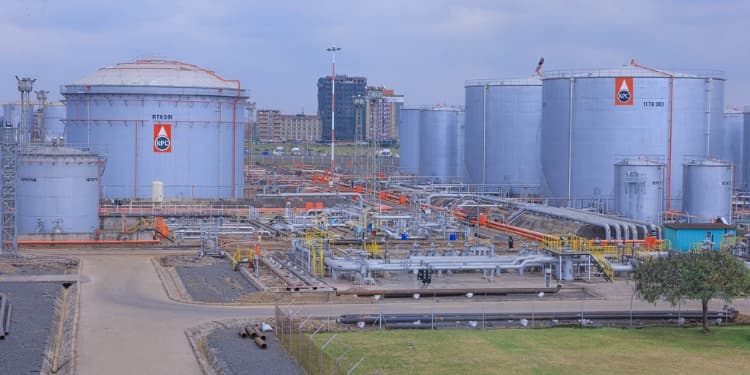
The Kenyan government has opened the Kenya Pipeline Company (KPC) Initial Public Offering, giving both local and foreign investors a chance to buy into one of the country's most successful state-owned firms.
This marks East Africa's first fully electronic IPO, with all applications processed digitally to make participation easier for everyone, from individual buyers to large organizations.
The state plans to offload 65% of KPC (totaling 11,812,644,350 ordinary shares) to generate roughly Sh106.3 billion for major infrastructure projects across the country.
Here's what you need to know to participate.
Essential IPO Information
Price per share: Sh9.00
Smallest purchase: 100 shares (Sh900 total)
Launch: 19 January 2026, 9:00 a.m.
Deadline: 19 February 2026, 5:00 p.m.
Who Can Apply
The shares are split into six groups for balanced allocation:
Kenyan individual buyers: 20%
Kenyan organizations: 20%
East African Community buyers: 20%
Foreign buyers: 20%
Oil distribution firms: 15%
KPC workers: 5%
Application Process
Step 1: Get a CDS Account
You'll need an active Central Depository System account to hold your shares digitally. Without one:
Reach out to any authorized stockbroker or investment bank
Submit your ID/Passport and KRA Pin
Several brokers let you create accounts through their mobile applications
Step 2: Pick Your Application Route
Applications can be done via phone or computer.
Option A: Mobile USSD (Easiest for individuals)
Dial *483*816# from your Kenyan phone
Accept the terms when prompted
Choose "New Application" and continue
Input your CDS account information
Complete payment when requested
Option B: Web Portal
Go to the official KPC IPO website
Create an account and start a new application
Complete all required fields including CDS number and investor category
Upload necessary documents (organizations only) and payment confirmation (bank transfers)
Step 3: Payment Options
All payments in Kenyan Shillings only, using these methods:
M-PESA
Pay through STK push or send to the Paybill provided by the Authorized Selling Agent. Your unique Application Serial Number serves as the account reference.
Single transaction limit is Sh150,000. Amounts above this require multiple payments.
Cooperative Bank
Paybill: 4999915
Account: 59867XXXXXXX (X = your 7-digit form number)
Kenya Commercial Bank
Paybill: 522533
Account: 40384XXXXXXX (X = your 7-digit form number)
Stanbic Bank
Paybill: 8250250
Account: 11140XXXXXXX (X = your 7-digit form number)
Record your M-PESA reference code as payment proof on the portal or physical form.
Note: USSD users can pay in installments as long as full payment clears by February 19, 2026.
Bank Transfer
Send via EFT or RTGS to the accounts below:
Cooperative Bank
Name: Privatisation Authority - KPC IPO
Number: 59867XXXXXXX
Branch: Co-op House (Code: 11002)
SWIFT: KCOOKENA
KCB
Name: Privatisation Authority – KPC IPO
Number: 40384XXXXXXX
Branch: Moi Avenue (Code: 01100)
SWIFT: KCBLKENX
Stanbic Bank
Name: Privatisation Authority – KPC IPO
Number: 11140XXXXXXX
Branch: Kenyatta Avenue (Code: 31000)
SWIFT: SBICKENX
Use your 7-digit application number in the narration field.
Loan Financing
Applicants can request financing from banks to cover the full payment amount.
Common Rejection Reasons
Applications get rejected when:
Information submitted is unclear or missing details
Cheques are used (not allowed)
Payment arrives after the February 19, 2026 cutoff
Required identity documents or KYC information is absent